Data Science & Cognitive Science at UC Berkeley
"People love what other people are passionate about."
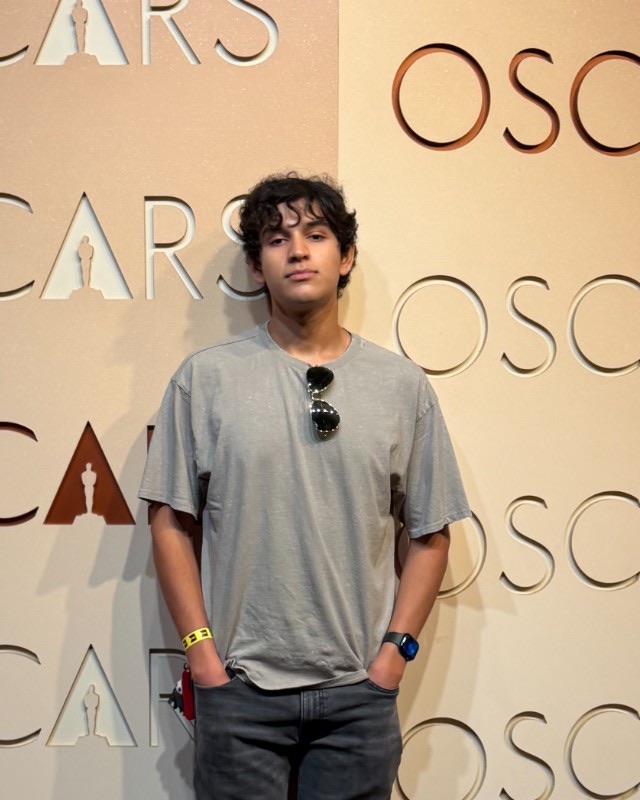
Hi, my name is Arnav and I'm a junior studying Data Science and Cognitive Science alongside a minor in Education at UC Berkeley. I really love using my knowledge and skills from school and elsewhere alongside leveraging AI to create projects that I wish existed but don't, like Genius Blurb, which shows you song meanings and stats right in the Spotify app, or Masq, a game that I created with my friends because we wanted more convenience, features, and options that we didn't find in other similar games.
I want to apply this skillset in the tech industry, whether it's entertainment, edtech, healthcare, or something else. I also plan to be a teacher in the future where I want to teach public high school.
In my free time, I love consuming all types of media, whether it's movies (proud AMC A-Lister), TV shows, anime, books, or card/board/video games (click the buttons below to see more).
Masq is a pass-and-play social deduction party game for one phone and a group of friends. The main idea is that everyone but the Jester gets a role, and then everyone goes around asking questions to try to figure out who the Jester is. I created it with a friend because we thought similar games in the genre were missing core features we wanted, like different modes (Role Mode, Duel Mode), custom categories, progressive Jester selection, and more.
getmeajobpls is a Chrome extension that autofills job applications. I made it because Simplify and Jobright were missing features I wanted, so I built my own. You open an application, click Fill page, and it uploads the right resume and answers the form from your profile. It works on Workday, Greenhouse, Lever, Ashby, and dozens of other sites, remembers answers to custom questions, and never clicks Submit for you. With your own Claude account, it can also tailor your resume to a posting and set up your whole profile from your resume. Everything else stays in your browser.
Showbiz predicts a band’s next setlist from their past shows on setlist.fm. You search an artist and it writes out the set they’re most likely to play on a marker-written sheet taped to the stage, with each song’s chance of being played. You can fit the prediction to a specific show (date, city, tour, festival or headline), see which songs swap in and out of the same spot, and save a prediction to grade it once the real setlist is posted.
The Cross-Media Recommendation Engine lets you use your favorite media to find recommendations in other mediums. That means you can enter a movie and get recommendations in the form of movies, TV shows, books, anime, video games, and music. The engine pulls from five external APIs and uses LLMs to build profiles and rank the media it thinks you’ll enjoy the most.
Genius Blurb is an extension for Spicetify, a customizable Spotify client, that shows you Genius song descriptions and credits in a little popup inside the Spotify app. I love learning more about music and what songs actually mean, and this is a way to do that while listening to my favorite songs. It also has live-synced lyric annotations, so I can see what individual lyrics mean on top of the overall song.
QR Scanner is a macOS menu-bar app and one of my earliest projects. I made it because I would have slideshows with QR codes open on my Mac but needed a phone to actually open them. QR Scanner lets you screenshot or upload an image of a QR code, and it will magically output the link the QR code points to. There’s also a DMG installer to make it easy to install.
Own the acquisition and enrichment of a national dataset of licensed clinicians for Puck, an AI-powered talent attraction and screening platform: filing public records requests with state licensing boards, keeping a source registry of provenance and quality issues, and running a matching waterfall to resolve and dedupe records across sources. Then build the dataset's unit economics to show where enrichment spend pays off, and design programmatic SEO pages that put the data to work.
Help teach high school algebra twice a week in a Math 2 (Algebra) class at Berkeley High School through CalTeach, UC Berkeley's program for STEM students exploring teaching, as the fieldwork for EDUC 130: Knowing and Learning in Mathematics and Science. Work with students one-on-one and in small groups as they push through challenging problems, and support the mentor teacher with activities and classroom routines.
Run weekly drop-in advising sessions as a first point of contact for students in UC Berkeley's College of Computing, Data Science, and Society, home to the Computer Science, Data Science, and Statistics majors. Help students with schedule planning, course sequencing, college requirements like Essential Skills and breadths, and undergraduate research opportunities, and point them to the right college or major advisor when they need more. Represent CDSS at outreach events like Cal Day and New Student Recruitment. Also sit on the peer advising events team, planning three academic and social events each semester that bring CDSS students together outside the classroom.
Built the data foundation for post-TAVI pacemaker risk modeling: a profiling, cleaning, and merge pipeline turning 24 fragmented trial sources into standardized patient-level tables and model-ready splits. Then trained and compared XGBoost, LightGBM, and logistic regression on top of it, each tuned with Optuna under stratified cross-validation and tracked end to end in MLflow.
Lead a 5-person events committee that reaches out to underserved high schools across the East Bay and beyond to recruit seniors into ANova's College Mentorship Program, which gives 58 students college admissions counseling, each paired with their own mentor from the club. Also help run the program's Discord server, where students ask questions and hang out over games. Raised $4,550 in crowdfunding for ANova Hacks, the club's free 24-hour spring hackathon for beginner high school coders from underserved communities, beating our $4,000 goal. Teach a weekly project-based computer science curriculum at partnered schools, Betty Reid Soskin Middle School and Cristo Rey De La Salle East Bay High School, mentoring students with little to no prior programming experience.
View crowdfundHelp plan and run events for Project Reboot, a digital wellness initiative that started as a UC Berkeley course (COGSCI 175: Mind, Machine, and Meaning: Living Intentionally in the Digital Age) and now works with secondary schools to build campus cultures of healthy technology use through student assemblies, parent workshops, and student-led clubs.
Joined David Bamman's NLP lab at the School of Information through Berkeley's Undergraduate Research Apprentice Program (URAP). Wrote multiple-choice questions probing long-form narrative understanding (plot, character, temporality, symbolism) for a benchmark of 61 public-domain Hollywood films, helped define its narrative categories, and answered other annotators' questions to set the human baseline (82% vs. 61% for the best model). Co-authored the resulting peer-reviewed paper, Evaluating Multimodal Narrative Understanding of Popular Hollywood Films, published at NeurIPS 2026 in the Evaluations and Datasets Track (25.8% acceptance rate) and presented as a poster.
View paperStaffed a peer-support warmline for callers navigating mental health challenges, offering non-crisis emotional support, active listening, and referrals to local National Alliance on Mental Illness (NAMI) programs and community resources. Trained in de-escalation and confidentiality practices, and logged call outcomes to help the program track community needs.
Built Python and SQL models quantifying CO₂ savings and fuel reductions across 1,000+ daily routes on Woosh’s AI-powered delivery network. Modeled adoption scenarios projecting up to 8,700 kg of CO₂ and $11,000 in fuel costs saved per day, and built heatmaps in pandas and Matplotlib showing how trip distance and adoption rate drive annual emissions.
Built market datasets covering 30+ Indian semiconductor and diamond firms through web scraping and API queries, then ranked R&D partners on KPIs in executive dashboards that informed leadership's partner selection strategy.
Developed for Berkeley Mobile, the ASUC Office of the Chief Technology Officer’s campus app that brings Bear Transit routes, dining hall menus, library and gym hours, and campus resources together for UC Berkeley students on iOS and Android.
Designed an end-to-end pipeline linking OCR-extracted place names from the RGTC (Répertoire géographique des textes cunéiformes) series to Wikibase records, querying Wikibase via SPARQL, matching and exporting proper nouns to JSON with a Python case-handling script, then writing OCR-derived location data back to matched entries. Improved OCR accuracy 20% and throughput 5× with automated logging in PostgreSQL for downstream analysis.
View projectGuided students through math and reading worksheets as a center assistant, explaining tricky problems one-on-one and keeping kids on pace with their individualized study plans. Graded completed worksheets against answer keys and logged scores to track each student's progress. Helped build a new onboarding system in Trainual to train the center's future hires.
This was a summer co-op on Abbott’s TAVI team. The bigger goal is predicting which patients will need a permanent pacemaker after a TAVI (transcatheter aortic valve implantation). The trial data came in as dozens of forms and spreadsheets that were all set up differently, so most of my summer went into getting it into a shape a model could actually train on. Since it’s a medical device company, every step also had to be something someone could go back and check.
The co-op followed a mentorship plan: two weeks of learning, four weeks working on the pipeline with guidance, and three weeks contributing code. Every week ended with something built.
Masq is a pass-and-play social deduction game you play on one phone with a group of friends. Everyone except the Jester gets the secret word (and in Role Mode, a role that goes with it), and the Jester has to bluff their way through a round of questions without getting caught. It started as a rough prototype called impfall. Before really building it, we did research and playtests and figured out what we wanted: a game for people already hanging out around one phone, with no account, no download, and roles that make it easier to come up with questions. From there it grew to have artwork on every card, a two-player mode, its own domain, and a lobby that remembers your group. I co-created it, designed it, and led development on everything from the game logic to the scripts that pull in the artwork.
app.js. About 2,700 lines removed and 994 added, and the game played exactly the same.index.html and it runs.localStorage: players, mode, categories, jester settings, timer, theme, custom categories, and crossed-out words. Crossed-out words get checked against the catalog on load in case a word was removed. The round itself doesn’t survive a reload on purpose.CHANGELOG.md covering all 64 releases that you can read inside the game.Created and coded by me. Richard Chen co-created the game and came up with the original concept, and Esha Bansiya also contributed. Inspired by Spyfall and Imposter.
getmeajobpls is a Chrome extension that fills out job applications for me. I open an application, click Fill page, and it attaches the right resume, waits for the site to read it, and then answers the rest of the form from my profile. It never clicks Submit, and everything stays in the browser unless I choose to use one of the Claude features.
Showbiz predicts the setlist for a band’s next concert. You search an artist, it downloads up to their 1,000 most recent setlists from setlist.fm, and it writes out the set they’re most likely to play, in order, with the encore below a line and a chance of being played next to every song.
The Cross-Media Recommendation Engine takes something you love, like a movie, book, anime, game or album, and recommends things both in that medium and in the others. It matches on theme, tone and mood instead of surface genre tags, and explains why each recommendation fits.
Genius Blurb is a Spicetify extension that brings Genius into Spotify. A small ✦ Genius button opens a panel with the backstory of the song that’s playing, its credits, and line-by-line lyric annotations that stay in sync with the music.
QR Scanner is a macOS menu bar app that reads QR codes straight off your screen. You take a screenshot of the code, or open or paste an image of it, and it shows the link so you can copy it with one click.
screencapture tool for the region selection, which is why the app asks for Screen Recording permission.VNDetectBarcodesRequest), which returns clear errors when there’s no code or the image can’t be read.Unrolling the map
Drag the bubbles around; hover one to see what it’s tied to.